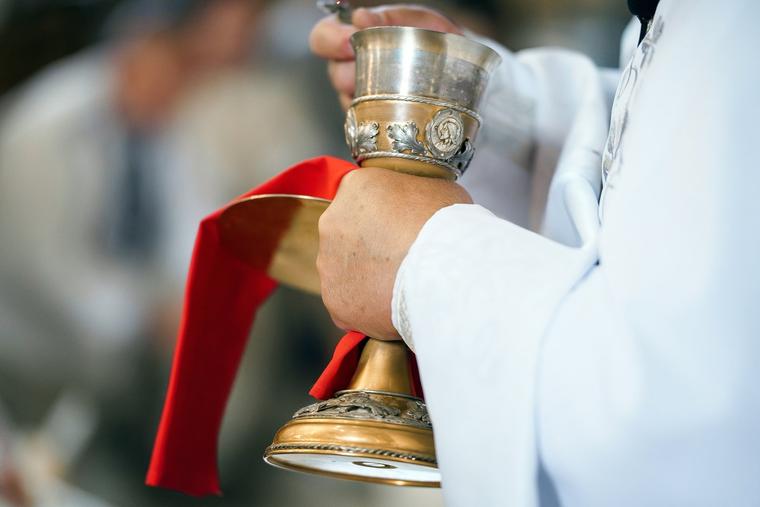
With a handful of U.S. dioceses moving to restrict the practice, Catholics are debating whether receiving Communion from the chalice should be widely available or reserved for special occasions.
Should laypeople be allowed to drink from the chalice during Communion? And if so, should the sacred cup be widely available or reserved only for special occasions?
Supporters of frequent access to the chalice point to the Catholic Church’s early practice and argue that Communion under the forms of both bread and wine offers a fuller expression of the Eucharistic banquet. But others worry that routine availability may increase accidental spills and argue that limiting access may increase reverence for the Blessed Sacrament.
Bishop Michael Olson of the Diocese of Fort Worth, Texas, brought renewed attention to this topic on Oct. 1 when he published a pastoral letter limiting the availability of the chalice to certain occasions throughout the year, including Holy Thursday, the Easter Vigil, Corpus Christi, the Chrism Mass, ordinations, and Masses at convents and retreat centers.
Bishop Olson, who declined an interview request from the Register through a spokesman, expressed concern in the letter about avoiding “profanation or disorder.”
“I must ensure that the Eucharist is treated with