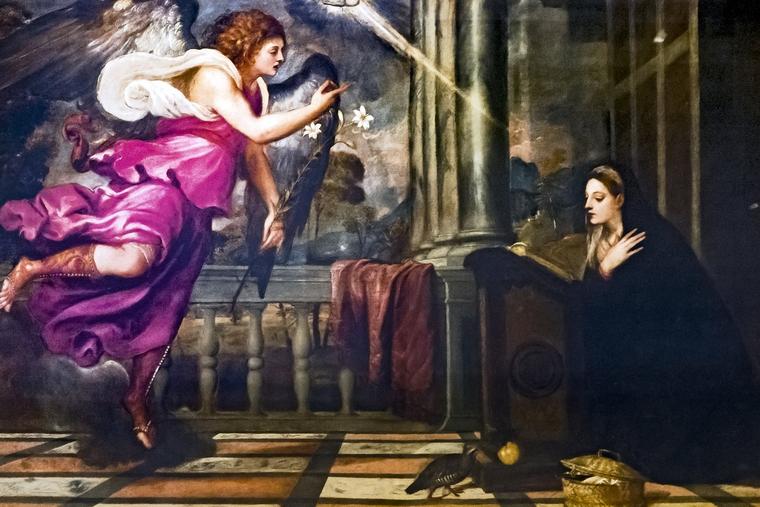
In a wonderful homily, St. Bernard of Clairvaux meditates upon the scene of the Annunciation in the Gospel of Luke. He casts it as a profound moment of theodrama.
Almighty God and all of creation await the answer of a humble virgin in Nazareth to the message from the Archangel Gabriel. The fate of the entire human race hangs in the balance.
Mary gives a simple and perfect “Yes” to Gabriel’s gentle request, and the narrative ends abruptly: “Then the angel departed from her.”
Her consent is the point of the entire overture from Gabriel. No further elaboration of future events is revealed to her. She gives her “fiat,” and that is sufficient for the moment at hand.
I see two aspects of the Annunciation. The first is the importance placed upon human freedom and human moral agency in the plan of creation and salvation. The second is how our freedom is truly free only when, paradoxically, it binds itself to a mission given to it by God.
Holiness Is Your Mission
There is a deep theological linkage between the Annunciation and the Visitation in Luke’s Gospel. After Gabriel leaves Mary, the very next verse (Luke 1:39) states: “In those