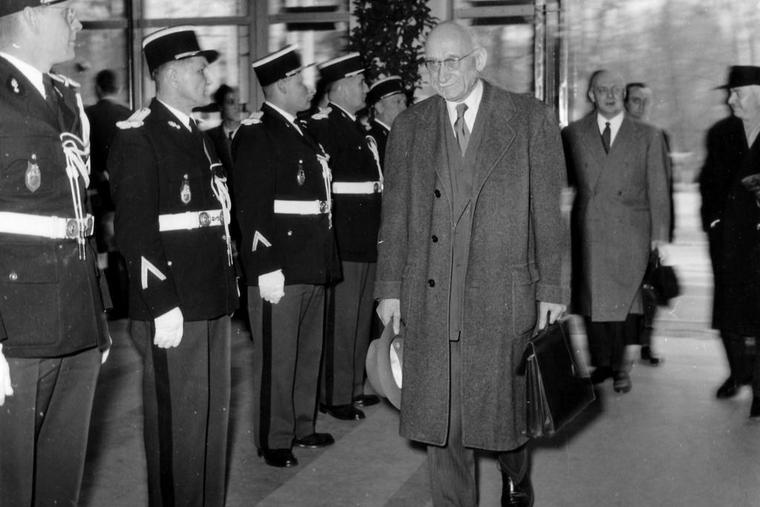
ANALYSIS: Schuman — who lived and is now buried in Metz — was not just an extraordinary politician, but a visionary.
Leo XIV ended his trip to France not by visiting Europe’s political institutions, as one might have imagined when the trip was conceived, but by paying homage to the man who had foreseen them: Venerable Robert Schuman.
During the Sept. 28 visit to the French city of Metz, described by Leo as “a crossroads at the heart of the continent,” the Pope reflected on the legacy of Schuman, considered to be one of the “founding fathers” of modern Europe.
It was Schuman, with his famous 1950 declaration, who laid the foundation for what would become the European Union just a few decades later. The idea was to “make war impossible” by fostering cooperation between peoples and bringing together nations that had historically been enemies, such as France and Germany. Schuman was a Frenchman who grew up on German soil and later returned to France, and he understood how borders could create conflict when nations did not work together toward a common interest.
“Robert Schuman, who lived through a time of constantly shifting borders, helped to lay