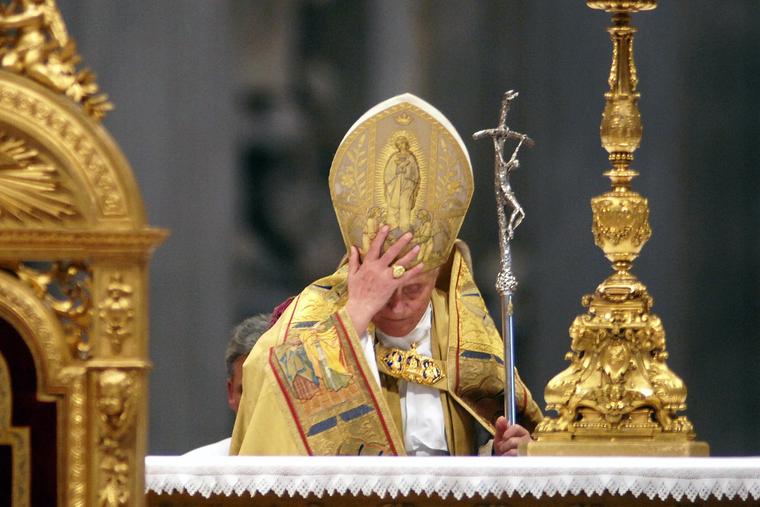
Pope Benedict XVI’s 2007 motu proprio Summorum Pontificum was about the liturgy. Except it wasn’t.
You see, the Holy Father had a burning desire to repair the rift between the Society of St. Pius X (SSPX) and the Catholic Church, and to repair it, he decided to turn his attention to an issue that, in a way, had nothing to do with it.
In a letter accompanying Summorum Pontificum, Benedict explained that the 1962 Missal “was never juridically abrogated and, consequently, in principle, was always permitted.” In short, even though it was rarely offered in most parts of the world, the form of the Mass as celebrated prior to Vatican II was never an issue because it was always allowed. So, Summorum Pontificum was just clarifying two forms of the one Roman Rite.
Except it was doing much more. By issuing Summorum Pontificum, Benedict XVI made it abundantly clear that, from his point of view, the chasm between the SSPX and Rome was no longer about the liturgy, for — at least in theory if not in practice — any member of the faithful could attend either form of the Rite.
So, what was the schism about?
To distill an