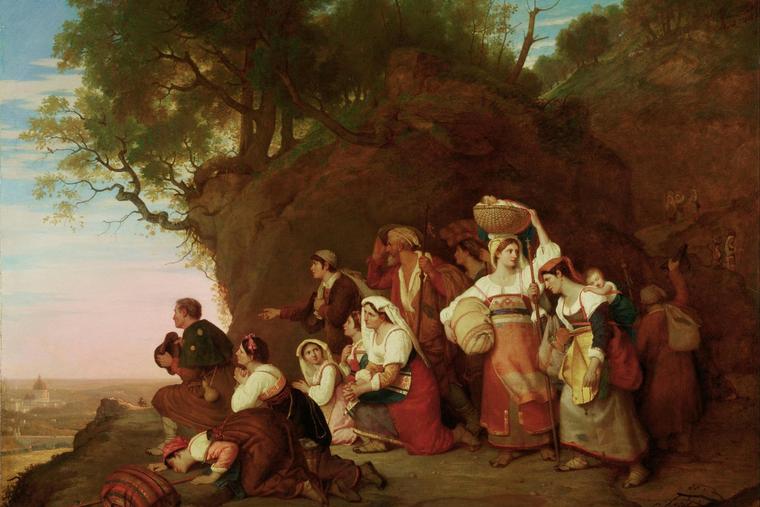
Pilgrimages have been a spiritual mainstay of the Church since the earliest centuries. St. Helena made what is considered the first major pilgrimage in 326 — to the Holy Land. St. Jerome described pilgrims going there in the late fourth century.
All pilgrimages, from short and simple, to local and domestic, share basic hallmarks. Making these pilgrimages — whether alone or with family, friends or a small group, whether for an hour, a day or overnight — following a pilgrimage’s basic conditions and guidelines will make them spiritually successful.
Since pilgrimages must have a purpose, what characterizes a pilgrimage?
Prayer is the first hallmark. A “pilgrimage is a journey of prayer,” explains the Holy See’s Directory on Popular Piety and the Liturgy.
Michael O’Neill, known as the “Miracle Hunter” (and host of the popular namesake series on EWTN) and producer of EWTN’s Hidden Gems: Catholic Shrines Across America, shares a basic definition. “A simple pilgrimage is a short, personal journey to a local or nearby shrine or sacred place made with the intention of prayer and drawing closer to God.”
A pilgrimage must have a purpose. Msgr. Charles Pope, a dean and pastor in the Archdiocese of Washington,