Warning: Minor spoilers ahead.
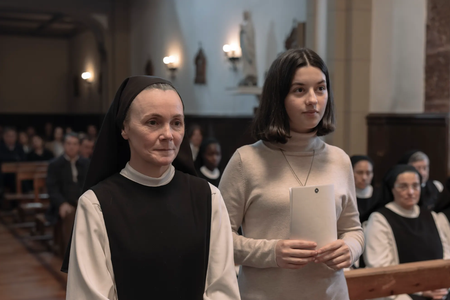
That one of Spain’s most acclaimed recent films centers on a 17-year-old girl discerning cloistered religious life is remarkable. Alauda Ruiz de Azúa’s Sundays (Los Domingos in the original Spanish) swept the Goya Awards, Spain’s Oscars, taking “Best Film,” “Best Director” and “Best Original Screenplay,” after winning the top prize at the San Sebastián Film Festival. More than 650,000 Spaniards saw it in theaters before streaming, a notable feat for a religious-themed film in the largely secularized country.
While Sundays’ success does not prove that Spain is returning to the Church, it does suggest something subtler. Modern audiences are still willing to be troubled by questions that secular culture often treats as settled — namely, those related to faith, family, obedience, freedom and the possibility that God still calls.
Sundays is not a pious film. But neither is it an anti-clerical exposé. Its achievement lies in refusing to lean towards one extreme or the other. When one considers that Ruiz de Azúa is an atheist, the film’s balance is even more impressive. As the director herself has said, her goal was neither to lecture nor to evangelize, but to present the phenomenon of religious vocation on