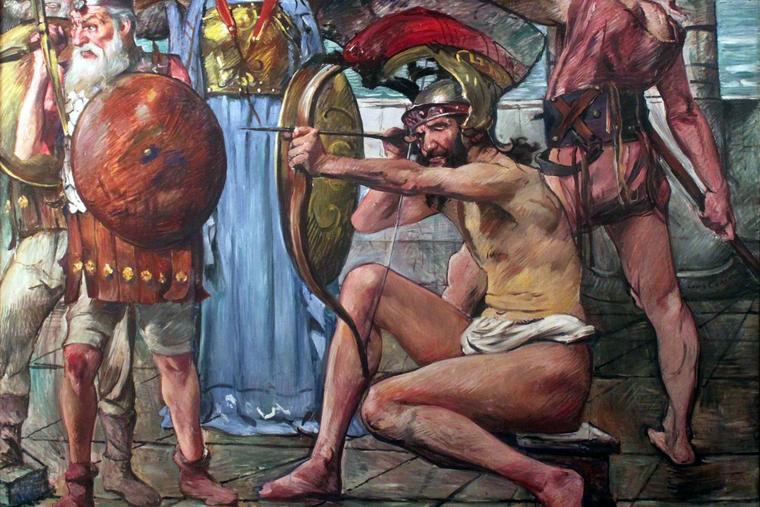
With the release of this summer’s blockbuster film The Odyssey, based on Homer’s ancient epic poem, suddenly — and perhaps improbably — everyone seems to want to talk about what the tale of Odysseus’ 10-year journey home from the Trojan War means for us today.
For Raymond Hain, professor of philosophy and humanities and associate director of the Development of Western Civilization Program at Providence College, a Catholic and Dominican university, in Providence, Rhode Island, it’s about time the rest of the world caught on.
“Homer never gets old!” Hain told the Register.
Beginning their freshman year, students at Providence take a required four-semester-long series of classes, taught by professors from history, theology, philosophy and literature, covering antiquity to contemporary thought, with readings from the Bible, St. Augustine, Dante, St. Thomas Aquinas, Milton, Marx and St. John Paul II, among others. Students in the program read either The Iliad, Homer’s epic poem about the Trojan War, or The Odyssey.
The Register asked Hain what students — and the rest of us — can get out of The Odyssey and why it is important to study classical texts as part of a Catholic liberal arts education.
Do you think The Odyssey