In 1925, Austrian writer Stefan Zweig looked out at a world increasingly shaped by radio, cinema, fashion and mass culture and saw something unsettling beneath the excitement of modernity.
He called it “the monotonization of the world.” Beneath technological novelty and cultural energy, Zweig feared that human beings were becoming increasingly interchangeable: adopting the same habits, consuming the same experiences, and surrendering themselves to what he described as a growing “mass soul.”
Writing after World War I and amid rapid social transformation, Zweig sensed that something deeper than politics or economics was shifting. Beneath the acceleration of modern life lay a quieter fear: that persons themselves were gradually becoming flatter, more uniform and less rooted.
If Pope Leo XIII confronted the social consequences of industrial modernity in Rerum Novarum, Zweig later witnessed many of its psychological and cultural aftershocks. The question was no longer simply how societies would organize work, but what kind of human beings would emerge from the world being built around them.
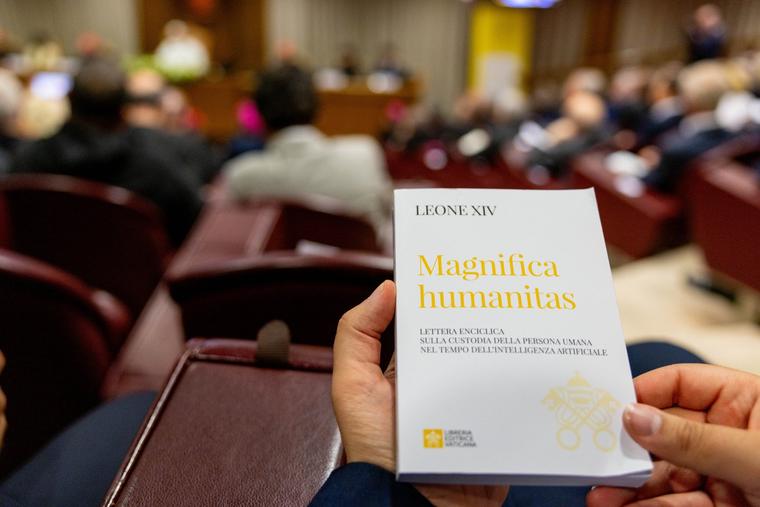
Nearly a century later, Pope Leo XIV appears to be asking a similar question in a different key. There is a providential symmetry in the emergence of a pope who appears heir to two traditions