Originally published at The Crux
Read more...
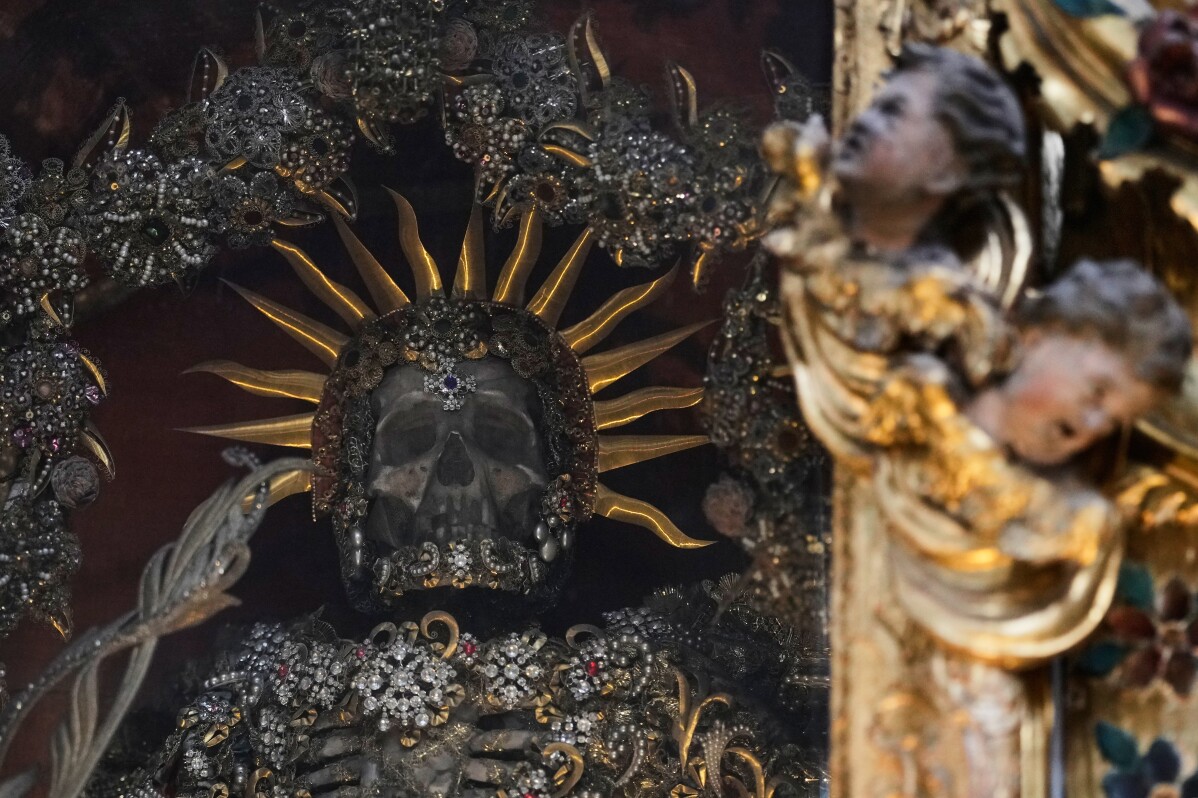
BAD STAFFELSTEIN, Germany — It is a sight that has sent shivers down the spines of many visitors: four complete skeletons draped in silk and brocade, adorned with precious stones, filigree gold, silver and lace that have been on display for centuries at the Catholic monastery church of Banz in southern Germany.
The skeletons — known as Vincenzius, Valerius, Benedictus and Felix Benedictus — are the remains of so-called catacomb saints that were brought to the Benedictine monastery near the Bavarian town of Bad Staffelstein from Rome in the late 17th and 18th century.
“It’s actually a little creepy,” whispered church custodian Anita Gottschlich as she looked at one of the skeletons. It seemed to be staring right back at her through its hollow eye sockets.
“I notice that when older people come here who visited as children, they always look for the Holy Bodies, because they can still remember them,” she added, noting the enduring fascination the skeletons hold for people of all