Originally published at The Crux
Read more...
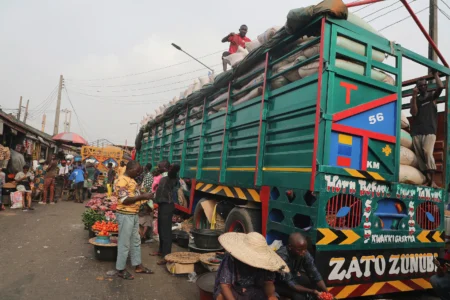
As the United States pivots toward protectionism and reciprocal tariffs under the Trump administration, China is aggressively opening its doors through tariff-free policies. It’s already been done in 53 of Africa’s 54 countries, the exception being Lesotho, which continues to maintain diplomatic ties with Taiwan.
This diverging global landscape poses a profound dilemma for African nations: is the West becoming an unreliable partner, effectively pushing the continent deeper into Beijing’s orbit? Or does this shifting dynamic offer Africa an opportunity to rewrite the rules of engagement?
In the second installment of a two-part interview with Crux Now, Professor Franklin Nnaemeka Ngwu of Lagos Business School dissects the risks of the emerging U.S.-China rivalry.
He warns that without “strategic autonomy,” Africa risks becoming a passive pawn in a geopolitical tug-of-war, leading to technological fragmentation and a loss of sovereignty.
From the decline of AGOA to Europe’s struggle to balance sustainability with market access, Professor Ngwu argues that the path to a “just and fair” economic relationship lies not in choosing sides, but in leveraging the African Continental Free Trade Area (AfCFTA) to negotiate as a unified bloc.
With Africa’s population projected to hit 2.5 billion by 2050, he underscores the