Originally published at The Crux
Read more...
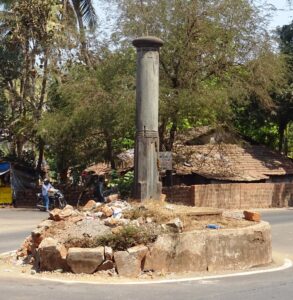
MUMBAI, India – There is a controversy over the 16th-century Pelourinho Novo (“New Pillory”) pillar in Old Goa after the Goa government recently referred to it as “Haath Katro Khambo” (Hand-Cutting Pillar).
It was a site where prisoners were punished during Portugal’s rule of the Goa region of India. The European country ruled the area from 1505 until 1961.
The move has reignited long-standing disagreements over its history, the available evidence, and political interpretations.
Today, some groups commonly refer to this structure as the “Hath Katro Khamb” or “Inquisition pillar,” and it has become part of a broader controversy over whether it should be officially recognized and renamed to symbolize alleged atrocities during the Goa Inquisition.
Right-wing Hindu organizations, including the Hindu Janajagruti Samiti (HJS), have previously held public events at the site, calling for its recognition as a memorial to victims of religious persecution. HJS maintains that the pillar is not merely a generic colonial-era structure but a direct symbol of the atrocities committed during the Goa Inquisition.
The state government’s move drew sharp criticism from historians, architects, and citizens, who accused the authorities of distorting history and legitimizing folklore associated with the Goa Inquisition.
The basalt pillar