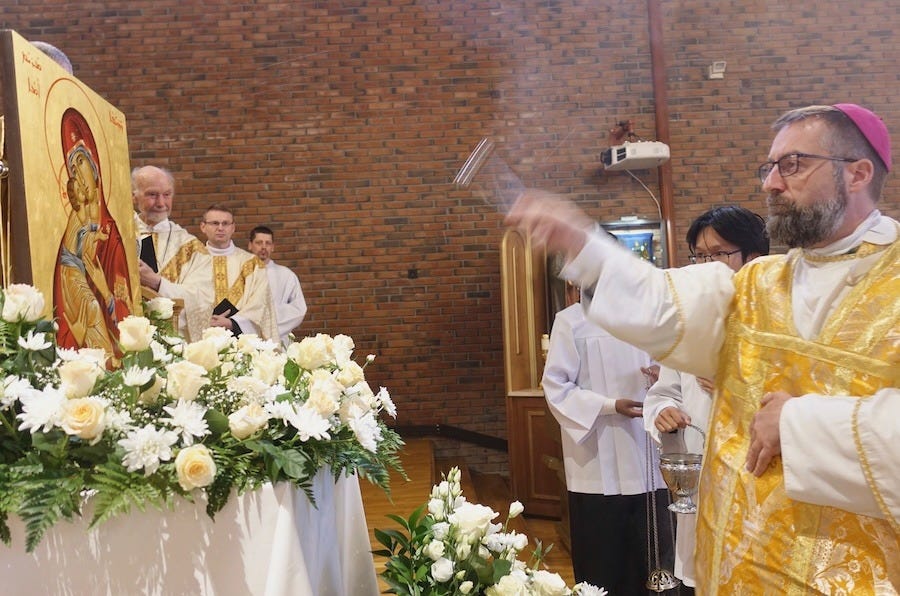
In the early morning and late at night, monks still rise to sing the divine office, their voices low and hoarse from sleep. With every breath they are keeping alive a centuries-old tradition in monasteries around the world.
But in a small corner of the internet, and on music providers like Spotify, another form of chant has taken hold. The text is often a hodgepodge of Latin-sounding words; a mechanical simulation not sung by human voices but generated by artificial intelligence (AI).
How should Catholics navigate the new phenomenon of AI-generated chant, or, in the term hymnist Alan Hommerding coined, “Chant GPT”?
What is Gregorian chant?
Chant isn’t something that is consumed, like social media or food. Instead, it is a way to worship and pray, according to Catholic theologians and musicians.
“Chant is not meant to be performed for artistic consumption but meant to attune our hearts to the Lord over the course of time,” Father Phillip Alcon Ganir, a Jesuit priest who teaches sacred music classes at Boston College, told EWTN News.