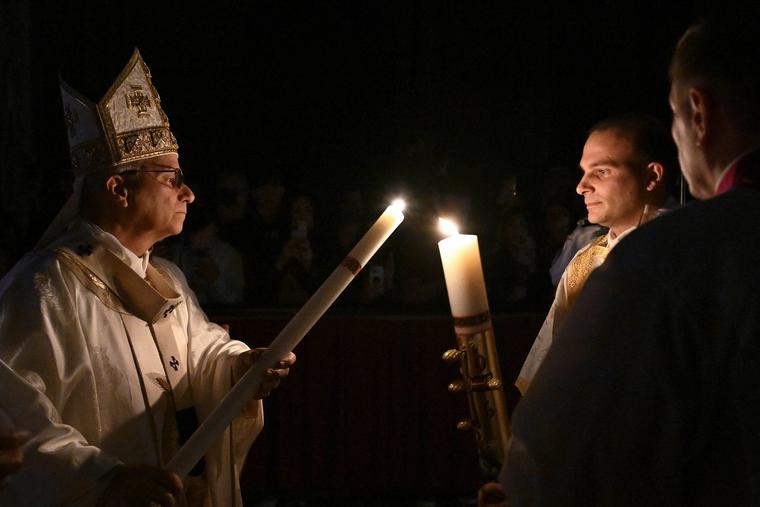
COMMENTARY: All catechesis should be incremental, communal, prayerful, liturgical, doctrinal and transformative.
What does it take to make someone a Catholic? The waters of baptism bring new birth, yet when we look around, we find many baptized pagans in the world today. In response, it’s easy to say that it’d be different if only they were better educated.
In the late 1960s, catechesis collapsed by focusing more on subjective experiences than on doctrine. With the release of the new Catechism in 1992, a wave of more theologically sound textbooks was produced, yet the crisis of attrition continued apace. It’s time to recognize that something else has been missing.
The sociologist Christian Smith offered a sobering assessment of the state of Catholic formation in his co-authored book, Young Catholic America: Emerging Adults In, Out of, and Gone from the Church: “We cannot report that Catholic schooling and youth group participation have robust effects on emerging adult faith and practice” (232).
These words confirm the experience of the last half century: what we’ve been doing has not generally succeeded at handing on the faith. Smith, however, also discovered a pathway of formation that worked remarkably well in handing on the faith, with