Each Advent, the Church calls us to prepare the way of the Lord. Yet, what does it mean to “prepare” for the God who is already present, who already dwells among us?
Advent is not only a countdown to Christmas; it is a renewal of a relationship. It is the season in which the Word again seeks to take flesh — this time within the stable of our hearts.
Bethlehem Within
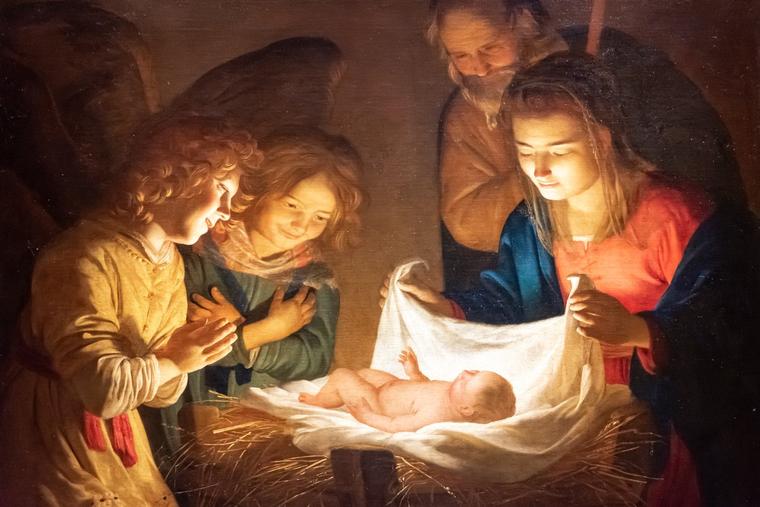
The mystery of Bethlehem reveals both who God is and who we are. The eternal Word of God chose to enter the world not through strength or status, but through humility. He who fashioned the stars was born in a manger, wrapped not in silk but in swaddling clothes. The Almighty entered creation through poverty and vulnerability.
This divine humility unveils the deepest truth of the human person. As St. John Paul II wrote in Redemptor Hominis, “The Redeemer of man, Jesus Christ, is the center of the universe and of history,” and in him, “man finds again the greatness, dignity and value that belong to his humanity.”
The stable of Bethlehem, then, is not only a distant event; it is a spiritual reality within each of us. We all have a stable — an inner dwelling, imperfect and unfinished, yet capable of becoming a place of divine encounter. In that interior stable, we find both beauty and disorder. Some corners glow with love and generosity; others are dark with pride, resentment or neglect. The straw of our daily efforts lies scattered. The animals — our disordered passions — roam freely. The air carries the smell of toil and imperfection.
And yet, it is precisely here that Christ wishes to be born. God does not recoil from our weakness; he enters it.
The Incarnation means that there is no corner of human experience so poor, so unworthy, that it cannot become his dwelling. Advent reminds us that the same Lord who once came to Bethlehem’s stable now seeks to enter the stable of our hearts. The question is not whether he will come, but whether there will be room.
Conversion as Relationship
When St. John the Baptist cried out, “Prepare the way of the Lord, make straight his paths,” he was not urging a program of moral perfection but an opening of the heart. Conversion is not primarily about achievement; it is about relationship. It is the reorientation of the person toward love.
John Paul II, in his personalist vision, reminds us that the human person “cannot live without love. He remains a being incomprehensible to himself … if love is not revealed to him, if he does not encounter love.” The call to repentance, then, is not a demand for guilt but an invitation to encounter.
To “clean the stable” of our hearts is to remove what prevents us from experiencing love’s nearness. This understanding transforms the work of conversion. We do not sweep the stable to make ourselves worthy; we sweep it to make space for grace. The effort itself is a response, not an initiative. It is God who first seeks man. Our repentance is the echo of his call.
This is why the sacrament of reconciliation is so fitting during Advent. Confession is not a courtroom but an encounter. It is the gentle sweeping of the soul by the broom of mercy. In the confessional, we do not present God with our failure but with our freedom — the freedom to let him enter anew. When we confess our sins, we are not simply acknowledging what is wrong; we are making space for what is right. We open the door, and the Christ Child steps across the threshold.
The Poverty God Desires
The Incarnation teaches us that God’s love is not repelled by poverty; it is drawn to it. The very conditions we often think disqualify us — our weakness, our need, our incompleteness — are the very ones that attract his presence. God does not seek the inn of perfection, but the stable of availability. The humility of Bethlehem is the pattern for divine intimacy. Christ comes where there is room, however poor, however small.
In our spiritual lives, we often imagine that holiness means self-sufficiency, that God will dwell only in a heart neatly ordered and clean. But this is a misunderstanding of grace. God is not a guest who waits for everything to be in place before he enters. He is a Redeemer who helps us to prepare by his very coming.
This is why prayer during Advent should be less about striving and more about surrender. We pray not to achieve, but to receive. The stable becomes holy not by human effort alone, but because God chooses to dwell there.
To acknowledge our inner poverty is not defeat — it is the beginning of communion. When we bring our poverty before God, we discover that he has already filled it with his riches. The manger becomes a throne.
Mary’s Fiat and the Openness of Love
No one models this openness better than the Blessed Virgin Mary. Her “Yes” to God was the perfect act of human freedom aligned with divine love. In her fiat, the Word found flesh, eternity entered time, and the Creator took residence within his creation. Mary’s consent is a sharing in the drama of that self-emptying love. She does not act out of fear or duty, but out of love freely given. Her openness allows God to act.
Mary shows us that preparation for Christ is not accomplished by doing more, but by receiving more deeply. Her simplicity, her receptivity, her willingness to be filled — these are the hallmarks of a heart ready for the Incarnation. Advent, then, is a Marian season because it invites us to imitate her interior attitude. We too are called to bear Christ into the world — not through grand gestures, but through quiet fidelity. Every moment of trust, every act of compassion, every choice to forgive becomes a new birth of Christ in the world.
The Incarnation and the Human Person
Christmas is not merely a memory — it is a revelation that continues. Every time Christ enters a human heart, the mystery of the Incarnation unfolds again. The mystery of the Incarnation is the mystery of man finding himself again through the sincere gift of self (Gaudium et Spes, 24).
To welcome Christ is to rediscover who we are. His presence restores the unity of our being — mind, heart, and soul aligned with truth and love. Consequently, the Incarnation does not distance God from humanity; it makes him nearer than we ever dared hope. The God who once lay in a manger now dwells within every baptized soul. The stable of the heart, when opened to him, becomes a living Bethlehem — a sanctuary from which his light radiates into the world.
From Stable to Mission
The Christ who enters the heart never remains hidden there. He draws us outward, sending us as witnesses of his love. Just as the shepherds left the manger rejoicing, so too are we called to bring the light we have received into our daily lives. This outward movement is the natural fruit of encounter. The one who has welcomed Christ cannot help but become a bearer of his presence. The stable becomes a doorway to mission.
John Paul II described this dynamic as the heart of the “new evangelization.” The Gospel advances not through programs or strategies, but through persons — hearts transformed by the experience of being loved. The most persuasive witness is not argument but authenticity: a life in which others glimpse the peace of Bethlehem.
Our homes, workplaces and parishes can all become extensions of that first stable — places where the tired, the anxious, and the searching encounter the warmth of God’s mercy. Each of us can make the love born in Bethlehem visible again in our time.
A Heart Set Free
When we allow Christ to enter, the stable of our hearts changes. The clutter gives way to calm, the darkness to light. The heart, once restless, becomes a dwelling of peace. This is the miracle of Advent: the infinite God humbles himself to dwell within the finite human heart. The stable becomes a sanctuary; the manger becomes a throne.
The angel’s proclamation, “Glory to God in the highest, and on earth peace to those on whom his favor rests,” is not merely a song of the past. It becomes our own song when we make room for Christ. The humility of God restores the dignity of man. The poverty of the stable reveals the wealth of divine love.
Be Not Afraid
At the beginning of his pontificate, St. John Paul II cried out, “Be not afraid. Open wide the doors to Christ!” That cry is the essence of Advent. The Lord is near. He stands before the door and knocks, not demanding entry but awaiting our invitation. He desires to make his home in the very places we think least worthy.
So let us sweep the stable once more — not with anxiety, but with joy. Let us clear away what hinders love and make room for the One who desires to dwell among us. And when he comes — as he always does, quietly, humbly — may he find in us a heart ready to receive him, a heart that has become, at last, a home for God.