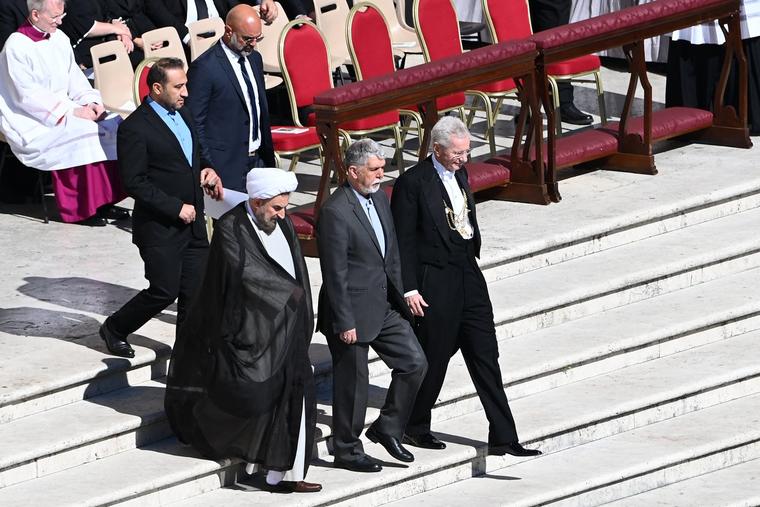
ANALYSIS: Behind a recent controversial honor for Tehran’s envoy lies a history of back‑channel diplomacy, shared U.N. battles and carefully tended lines to the ayatollahs.
In late March 2007, as the Ahmadinejad government paraded captured British Royal Navy personnel on Iranian television, the crisis appeared to be hardening into one more grim standoff between Tehran and the West.
Behind the scenes, however, quiet efforts were underway to secure their release. Among the most effective involved the British Embassy to the Holy See, Vatican diplomats and Iranian officials. At the center of these efforts was Msgr. Pietro Parolin, then the Vatican’s undersecretary for relations with states.
Working with long-established U.K. and Iranian diplomatic contacts, Msgr. Parolin arranged for Pope Benedict XVI to send a confidential appeal to Iran’s spiritual leader, Ayatollah Ali Khamenei, requesting the sailors’ release as a goodwill gesture before Easter. The appeal succeeded, and the sailors were freed on April 4, the Wednesday of Holy Week, in what President Mahmoud Ahmadinejad described as an “Easter gift” to the British people.
The episode was a reminder that the Vatican’s relationship with Iran — one that officially dates back to 1966 — has long been more substantial,