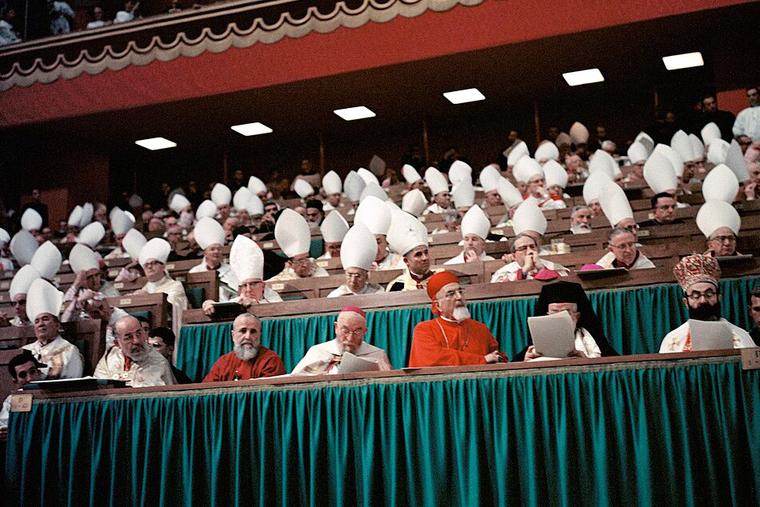
With the Society of St. Pius X’s recent announcement of its intention to proceed to unauthorized episcopal ordinations, the Catholic Church once more faces the sad possibility of further rupture.
Such an event, while it involves a relatively small group of persons, should nonetheless be a matter of concern for all Catholics, since unity is an essential part of the identity Christ willed for his Church.
The motive for this new step toward further division is not new: “the fundamental orientations adopted since the Second Vatican Council,” as the superior general of the society has recently stated. Such a direction, the society’s leaders contend, “has proven to be a rupture with the Tradition of the Church.”
A key part of the SSPX’s critique of the Council has been the declaration Dignitatis Humanae, which would allegedly involve a contradiction with previous Church teaching.
For Catholics, the pope remains the authentic authority for interpreting the Church’s tradition. Recent Roman pontiffs have guided the Church firmly along the path of the Council’s teaching. At the same time, the clarity provided by such instruction does not take away from the importance of seeking to understand Vatican II in its own historical and theological