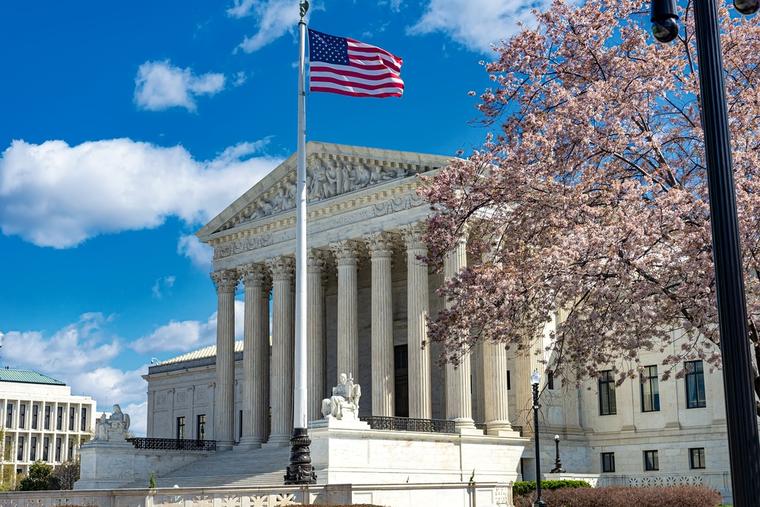
COMMENTARY: That’s what the Supreme Court will decide in ‘Landor v. Louisiana Department of Corrections.’
Any day now, the Supreme Court will decide whether America’s landmark law protecting the religious freedom of prisoners has any real teeth.
The case is Landor v. Louisiana Department of Corrections: Damon Landor, a Rastafarian serving a five-month sentence, honored the Nazarite Vow for nearly 20 years, growing his dreadlocks as a sincere expression of his faith.
Three weeks before his release, guards moved to shave him bald. Landor produced a Fifth Circuit opinion confirming his right under the Religious Land Use and Institutionalized Persons Act (RLUIPA) to keep his hair. An officer threw the opinion in the trash, handcuffed him to a chair, and shaved his head anyway. Even judges who ruled against him called the treatment “stark and egregious.”
The question before the Court is whether Landor can sue that officer personally for money damages. It is, at bottom, a question about whether rights without remedies are rights at all.
Among the many different voice[s] supporting Landor are seven leading religious-liberty scholars from Stanford, Notre Dame, Harvard, Pepperdine, and Villanova who argue that dismissing Landor’s claims makes “RLUIPA a dead