By Christina Capecchi
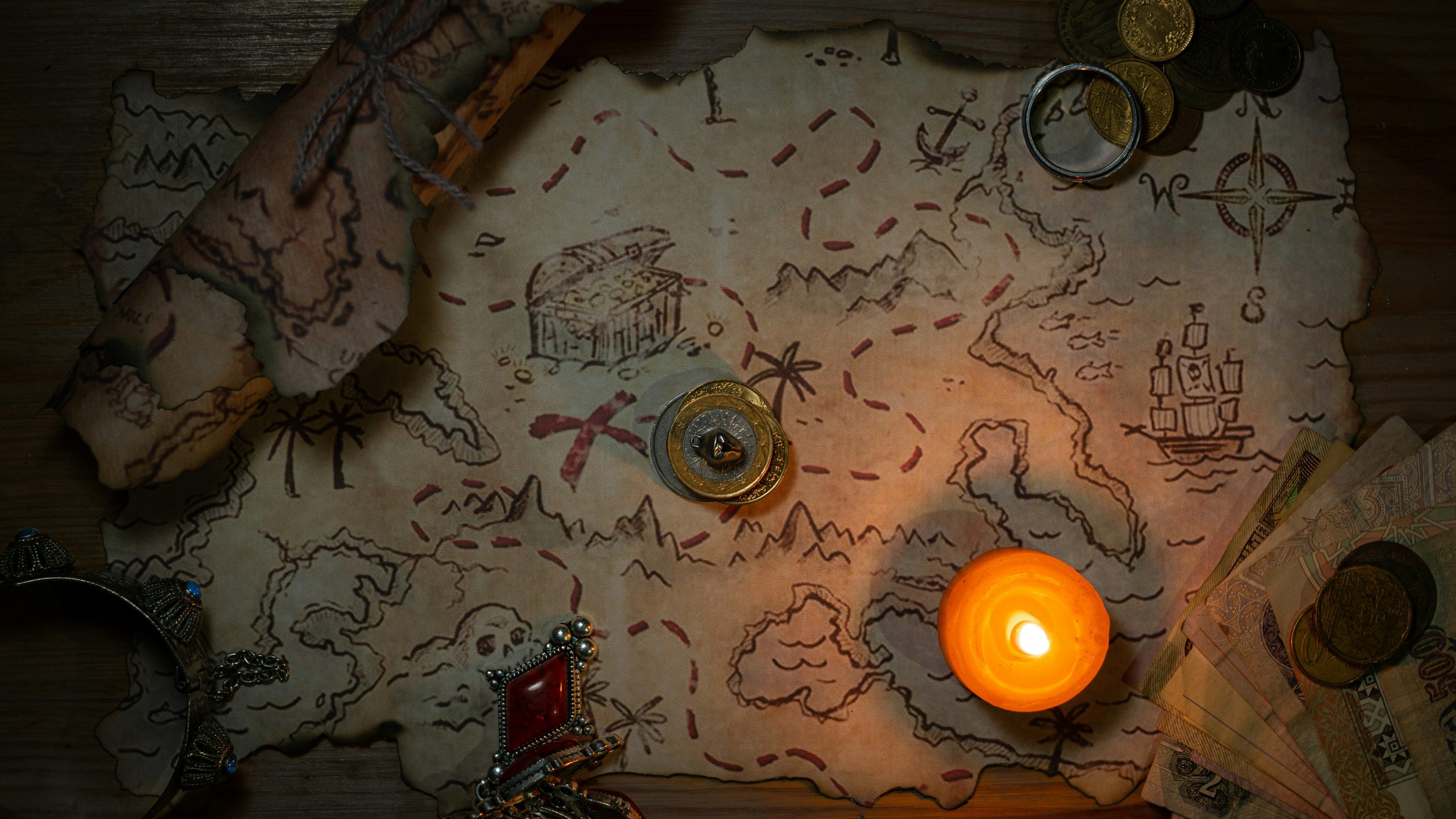
Before there was a story, there was a map.
The map contained the story. Robert Louis Stevenson just had to stare at it long enough.
Eventually, characters emerged from the woods, and he began scrawling a list of chapters. “Treasure Island” was born.
Nearly a century and a half later, the book still haunts and delights readers.
It all started during summer vacation back in 1881, when the 30-year-old writer joined his wife and 13-year-old stepson, Lloyd, in the Scottish Highlands. On rainy days, they would draw together. Stevenson sensed that the teen needed something “craggy to break his mind upon,” he later wrote. He was thinking in geography — cliffs, hazards, drama.
One day, Stevenson drew a map of an island, adding color and labeling it “Treasure Island.”
“The shape of it took my fancy beyond expression,” Stevenson recounted. “It contained harbors that pleased me like sonnets.”
Maps had always fascinated him, with “the shapes of the woodlands, the courses of the roads and rivers, the prehistoric footsteps of man still distinctly traceable up hill and down dale, the mills and the ruins, the ponds and the ferries …,” Stevenson wrote. “Here is an inexhaustible fund of
Read more...