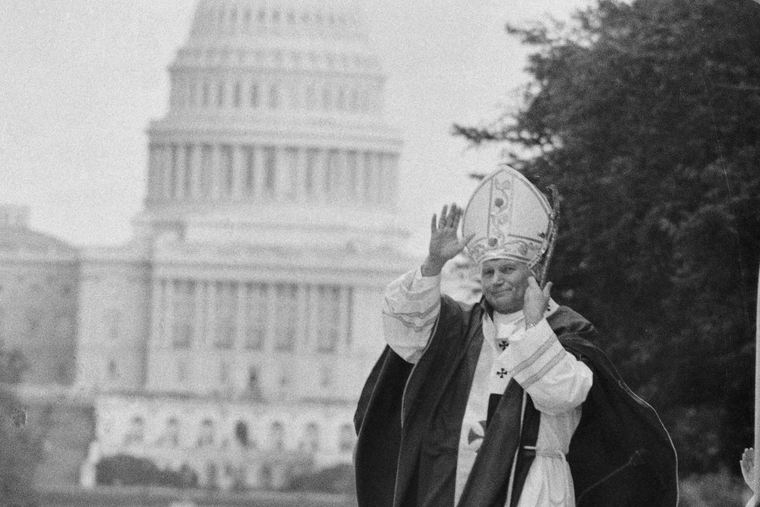
COMMENTARY: Spurred by his groundbreaking visit in 1979, the most influential Catholic in the 20th century had high hopes for the U.S.
When he was elected Bishop of Rome on Oct. 16, 1978, Cardinal Karol Wojtyła had a rather limited experience of the Catholic Church in the United States. He had met American Churchmen at the Second Vatican Council, and a few of them visited Poland in the ensuing years.
The Cracovian cardinal had made two visits to the United States, one during the national bicentennial in 1976, but the majority of his time during these trips was spent with Polish American communities. So it’s probably fair to say that John Paul II began his papacy with an impression of American Catholicism not dissimilar from that of other European intellectuals: The U.S. Church had an enviable network of institutions — ranging from parishes to healthcare and social service facilities to schools, colleges and universities — but the Church was more wealthy than cultured and lived too comfortably within the American status quo.
In short, while the new Pope wasn’t hostile to the Church in the U.S., neither did he see it, in 1978, as one possible template