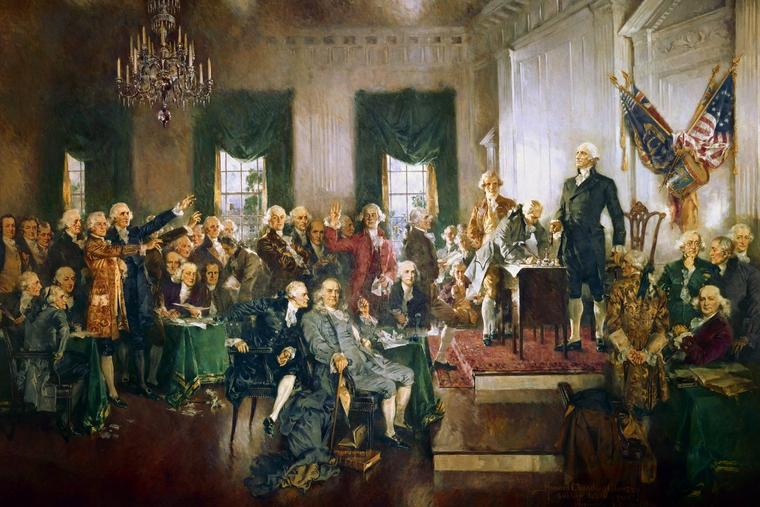
As the United States marks the 250th anniversary of its founding, George Washington has once again become a familiar point of reference for American Catholics. The connection is, at first glance, an unexpected one.
Washington was an Anglican, and there is no serious historical evidence that he ever sought reception into the Catholic Church (more on his supposed deathbed conversion later). Yet among American Catholics, no Founding Father has been more consistently admired — or more closely associated with the political conditions that made Catholic life possible in the early republic.
Before independence, Catholic life in much of the 13 colonies often remained hidden due to religious persecution. In many regions, the faith mostly survived through private devotion, household worship and the ministry of priests traveling between scattered communities.
Even where the law permitted restricted freedom of worship, Catholics were barred from holding public office and often viewed with suspicion inherited from England’s religious turmoil, where allegiance to Rome was frequently treated as incompatible with political loyalty. In colonies such as Pennsylvania, that limited permission allowed Mass at Old St. Joseph’s in Philadelphia but did not extend to full civic equality.
Michael Breidenbach, associate professor of history at