Amid ongoing controversy surrounding access to the Traditional Latin Mass, a more reverent celebration of the Novus Ordo Mass has emerged in many parishes as a possible path forward.
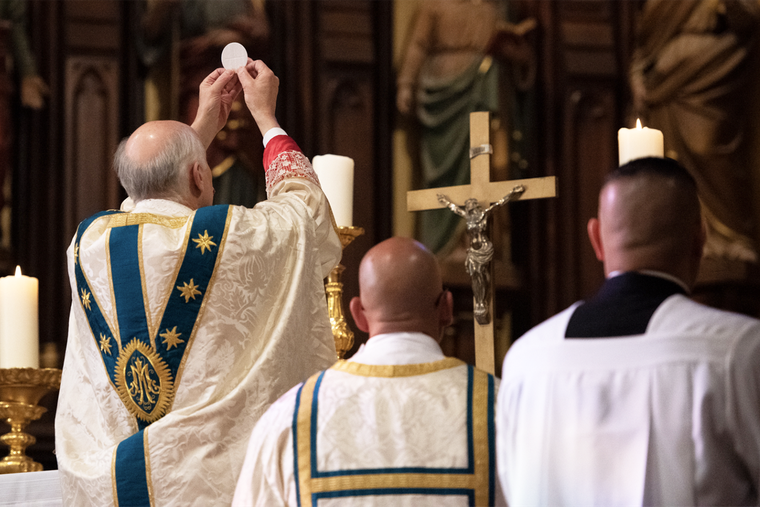
At a typical 5 p.m. Sunday Mass at St. John Vianney Parish in Goodyear, Arizona, a haze of incense wafts over the pews as congregants respond to the priest mostly in Latin. Gregorian chant echoes through the church, and after Communion — during which many people kneel at an altar rail to receive the Eucharist — there’s a long period of contemplative silence.
To many Mass-going Catholics, these reverent liturgical practices are more readily associated with the pre-Vatican II liturgy — commonly known as the traditional Latin Mass (TLM) — than with the reformed liturgy, colloquially called the Novus Ordo, which is what the vast majority of Catholics actually attend on any given day.
But in fact, the liturgy in question is what is widely described as a “reverent Novus Ordo” — a post-Vatican II form of the Mass that incorporates many liturgical elements that fell out of practice following the council but were never, in fact, prohibited.
Today, a growing number of U.S. parishes — especially in certain dioceses where