Originally published at The Crux
Read more...
August 9 is the United Nations’ International Day of the World’s Indigenous Peoples, this year dedicated to preserving the Indigenous knowledge systems that have sustained the well-being of Indigenous Peoples for generations.
“Rooted in holistic worldviews that connect territory, spirituality, community and ways of life,” the UN says of this year’s focus, “they encompass values, practices and forms of care that have been developed and passed on over time.”
Throughout the world, there is a specific focus on midwifery under the theme: “Honoring Indigenous Midwives: Safeguarding Life and Well-being.”
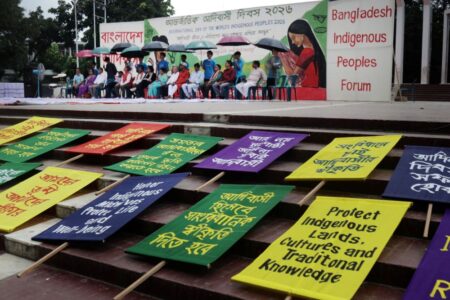
In Bangladesh, however, organizers are using the celebration to demand constitutional rights, land rights and other rights for Indigenous People.
Bangladesh is a country of 180 million people, the vast majority of them Muslim, while more than half of the country’s 600,000 Christians belong to various Indigenous groups.
The Indigenous Peoples of the country planned discussions, rallies, cultural programs, and the Day was also being celebrated by various Catholic-run schools, colleges, and churches.
The Catholic Church in Bangladesh has been working for years to support Indigenous Peoples through education, healthcare, and assistance with land rights problems.
Nevertheless, Garo indigenous rights activist Theophil Nokrek believes that the church needs to do