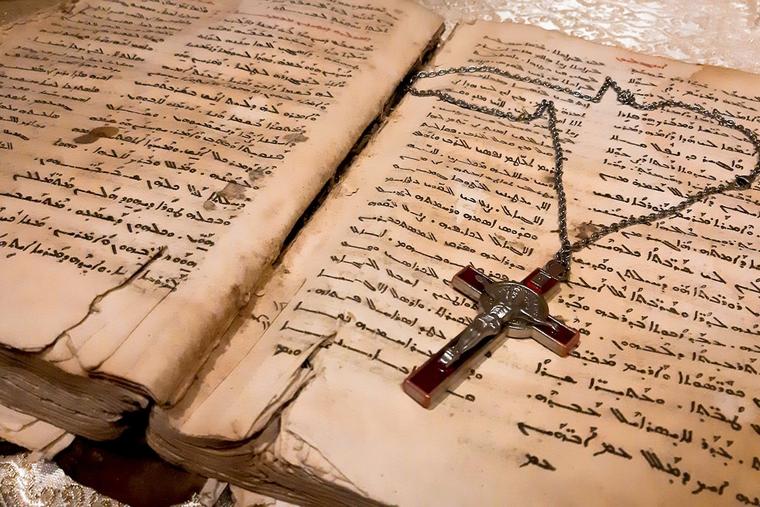
Among the key findings are ancient lists of chapters considered the oldest known for St. Paul’s epistles, which differ notably from the current division of these texts.
An international team of scholars led by professor Garrick Allen of the University of Glasgow in Scotland has successfully recovered 42 lost pages of one of the most important New Testament manuscripts, known as Codex H.
The universityʼs College of Arts and Humanities announced April 24 that the codex, a sixth-century copy of St. Paul’s epistles, had been partially lost after being disassembled in the 13th century at the Great Lavra Monastery, located on Mount Athos in northern Greece.
Its pages were repurposed as binding material and flyleaves in other books, causing fragments of the manuscript to become scattered across libraries in various European countries.
“The breakthrough came from an important starting point: We knew that at one point, the manuscript was re-inked. The chemicals in the new ink caused ‘offset’ damage to facing pages, essentially creating a mirror image of the text on the opposite leaf, sometimes leaving traces several pages deep barely visible to the naked eye but very clear with latest imaging techniques,” explained Allen, as quoted by the