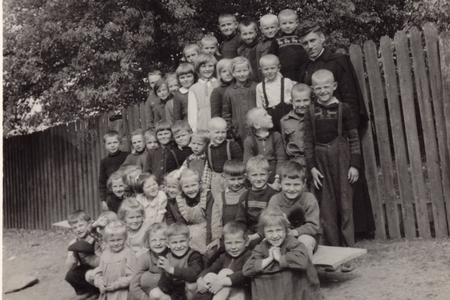
When Father Roman Kotlarz served his parishioners, his cassock was frayed, and his parish was in need of repair. It was 1970s Poland, still under communist rule, and the priest, who was in his 40s, used his entire budget to tend to the needs of the members of his parish.
Father Kotlarz always lived in “spartan conditions,” said Michał Adamczyk, a historian from Poland’s Institute of National Remembrance and creator of a museum exhibit on Father Kotlarz. For instance, when coal became difficult to obtain, Father Kotlarz got it on the black market and shared it with his poorest parishioners, especially large families.
More than a decade before the fall of the Iron Curtain, Father Kotlarz had become an outspoken advocate for the dignity of workers under Poland’s communist regime, and on Aug. 18, 1976, this stance would claim his life.
In the years leading up to the 1991 collapse of the Soviet Union, support for communism in Poland was relatively low due to fresh memories of Russian oppression, the Polish tradition of rebellion against foreign subjugation, and the ardent Catholic faith of many Poles.
In the 1980s, the anti-communist trade union-turned-nonviolent national liberation movement Solidarity numbered 10 million people,